What is a
Recurring Invoice?
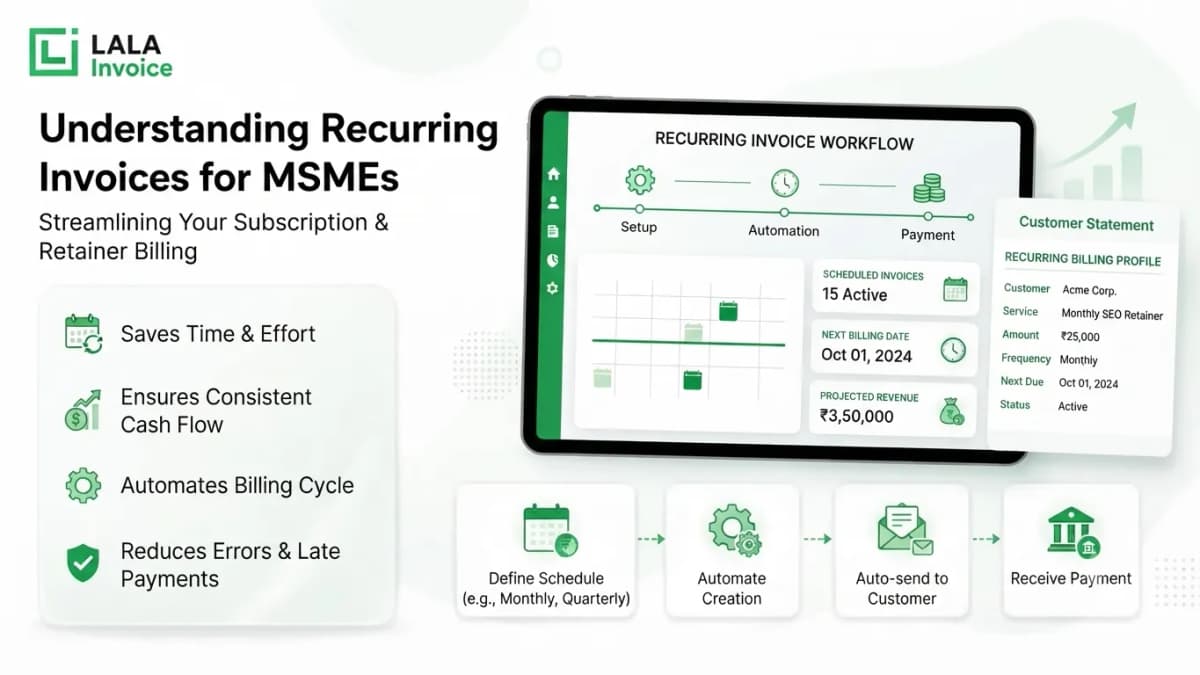
A recurring invoice is a billing method where invoices are automatically generated and sent to customers on a regular schedule—monthly, quarterly, or yearly. It streamlines billing for ongoing services, subscriptions, and repeat business, ensuring you never miss a payment.
Automated Billing
Schedule & send invoices
Predictable Cash Flow
Stable recurring revenue
Save Time
No manual invoicing
Secure Payments
Encrypted & reliable
Why Use Recurring Invoices for Your Business?
Automated Recurring Invoices
Set up automatic invoice generation on a fixed schedule.
Customer Subscription Management
Manage subscriptions and recurring billing with ease.
Payment Reminders
Automate payment reminders for recurring invoices.
Revenue Forecasting
Predict cash flow with predictable recurring revenue.
Payment Tracking & Monitoring
Track payments and manage overdue invoices seamlessly.
Master Recurring Invoices for Your Business
A recurring invoice is a billing document that is automatically generated and sent to a customer at predetermined intervals. This invoicing method is widely used for subscription-based services, membership fees, retainer agreements, and any business model where customers are billed regularly for ongoing products or services.
Using recurring invoices helps businesses save time, reduce manual errors, improve cash flow predictability, and enhance the customer billing experience. Automating the invoicing process ensures that no invoice is missed and payments are collected consistently and on time.
When to Use Recurring Invoices
Subscription-Based Services
For businesses offering SaaS, software licenses, streaming services, or any subscription model where customers pay a fixed recurring fee.
Membership & Retainer Agreements
For membership organizations, professional services on retainer, or ongoing consulting agreements that require regular monthly or quarterly billing.
Rental & Lease Payments
For property rentals, equipment leases, vehicle leases, or any asset rental that requires consistent recurring payments.
Maintenance & Support Contracts
For annual or monthly maintenance agreements, support contracts, and service level agreements that renew automatically.
Retainer-Based Professional Services
For lawyers, accountants, consultants, and agencies that bill clients a fixed monthly fee for ongoing services.
Repeating Custom Orders
For wholesale suppliers, distributors, or manufacturers who fulfill regular orders for the same products or services on a fixed schedule.
Benefits of Recurring Invoices for Your Business
Implementing recurring invoices can transform your billing process and improve your business operations:
- Save Time & Effort: Eliminate manual invoice creation and follow-ups.
- Improve Cash Flow: Ensure predictable and consistent revenue streams.
- Reduce Billing Errors: Automate calculations and reduce human errors.
- Enhance Customer Experience: Provide consistent and reliable billing.
- Increase Payment Speed: Get paid faster with automated billing.
- Simplify Subscription Management: Easily manage plan changes and cancellations.
- Gain Revenue Predictability: Forecast revenue accurately with recurring billing.
- Automate Follow-ups: Send payment reminders and late notices automatically.
Best Practices for Using Recurring Invoices
Set Clear Billing Terms
Clearly define billing frequency, payment due dates, and any late fees or penalties in your recurring invoice terms.
Use Automated Payment Reminders
Configure automated reminders to notify customers before each recurring invoice is due, reducing late payments.
Offer Multiple Payment Methods
Provide customers with flexible payment options like credit cards, bank transfers, and digital wallets for convenience.
Review and Adjust Regularly
Periodically review your recurring billing settings, pricing, and customer preferences to ensure they remain relevant.
Notify Customers of Changes
Always inform customers about changes to billing amounts, schedules, or terms well in advance to maintain trust.
Maintain Accurate Customer Records
Keep customer contact details, billing information, and subscription preferences up to date for smooth invoicing.
Start Using Recurring Invoices Today
Recurring invoices are a powerful tool for businesses of all sizes. Whether you run a subscription service, a consulting firm, or a product-based business, automating your recurring billing saves time, improves cash flow, and enhances the customer experience. Start implementing recurring invoices today to unlock predictable revenue and operational efficiency.
Understanding Recurring Invoices for Business Growth
A recurring invoice is a strategic billing tool that helps businesses automate regular billing cycles. By setting up recurring invoices, companies can streamline operations, reduce administrative overhead, and predict revenue with greater accuracy. This approach is ideal for subscription-based services, membership programs, and any business with repeat customers.
01. What Exactly Is a Recurring Invoice?
A recurring invoice is an invoice that is automatically created and sent to a customer at regular intervals—such as weekly, monthly, quarterly, or annually. Unlike one-time invoices, recurring invoices are generated based on a predefined schedule, making them perfect for services that are billed consistently.
02. Which Businesses Should Use Recurring Invoices?
Recurring invoices are ideal for service-based businesses, subscription platforms, software companies, agencies, consultants, landlords, and any business that bills customers on a regular basis. If you have predictable, recurring revenue, recurring invoices can save you significant time and effort.
03. How Do Recurring Invoices Improve Cash Flow?
Recurring invoices create predictable revenue streams by ensuring that invoices are sent consistently and on time. This predictability helps businesses forecast cash flow accurately, plan expenses, and maintain financial stability. When combined with automated payment methods, recurring invoices can significantly speed up payment collection.
04. What Should You Include in a Recurring Invoice?
A recurring invoice should include the same details as a standard invoice—invoice number, date, customer information, description of goods or services, quantity, rate, and total amount. Additionally, it should clearly specify the billing frequency, next billing date, and any terms or conditions related to the recurring nature of the billing.
05. How to Implement Recurring Invoices in Your Business
Implementing recurring invoices is easy with modern billing software. Start by identifying which customers or services will use recurring billing. Then set up a billing schedule, define payment terms, and choose your preferred payment methods. Most platforms also allow you to automate payment reminders, late fees, and recurring invoice management.
✓ Recurring invoices are essential for businesses that want to automate billing, improve cash flow predictability, and focus on growth rather than administrative tasks.