Stock Summary
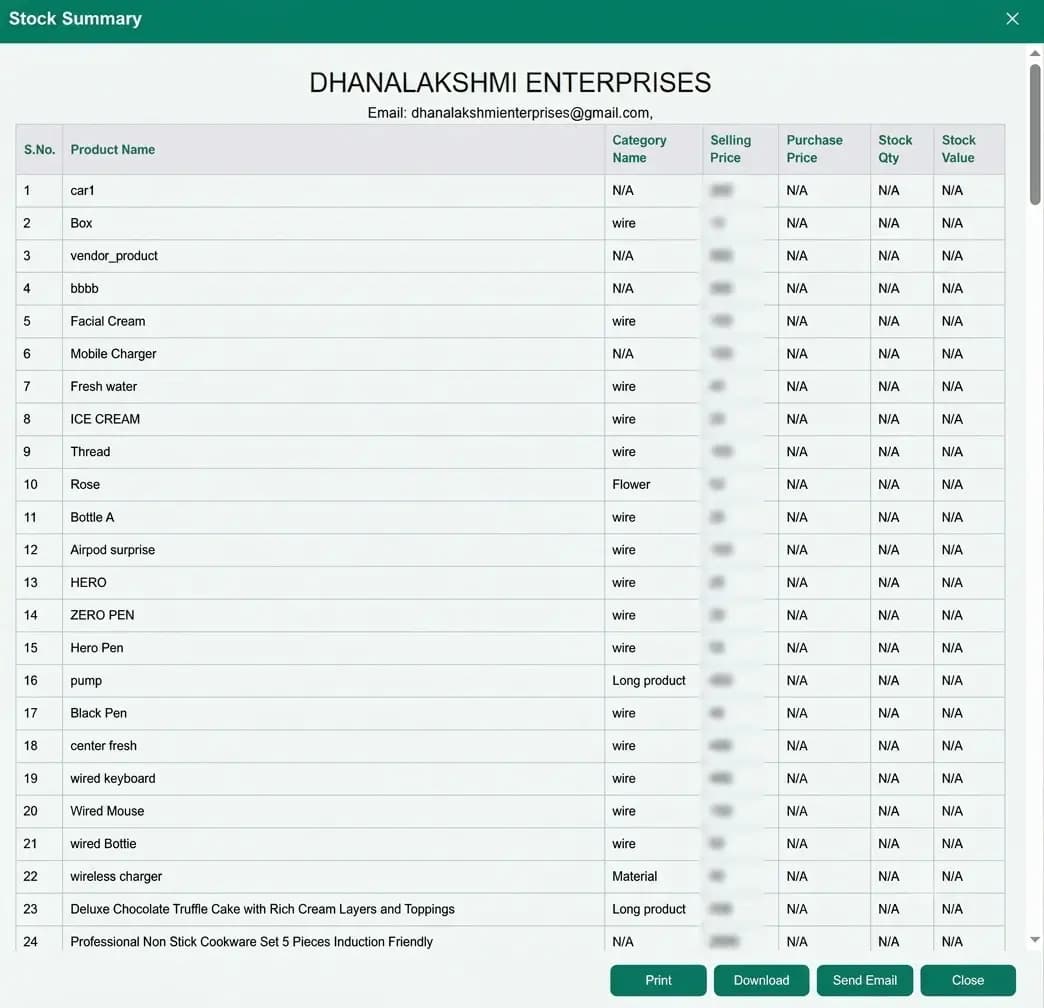
Track Your Inventory Health
Get a complete overview of your stock position with real-time inventory tracking, valuation insights, and movement analysis. Make informed decisions to optimize your stock levels and reduce carrying costs.
Real-time Tracking
Live updates
Smart Alerts
Low stock notifications
Turnover Analysis
Movement insights
Valuation Reports
Accurate costing
Everything You Need to Manage Inventory Efficiently
Stock Tracking
Monitor inventory levels in real-time across all locations.
Valuation Analysis
Track stock value and identify high-value inventory items.
Movement Trends
Analyze stock movement patterns and turnover rates.
Low Stock Alerts
Get notified when stock levels fall below thresholds.
Detailed Reports
Generate comprehensive stock summary reports instantly.
Master Your Stock Management
A stock summary report provides a comprehensive overview of your inventory position, including quantities on hand, total value, turnover rates, and stock status. This essential business document helps you understand your inventory health, identify slow-moving items, and make strategic decisions about purchasing, pricing, and stock optimization.
Whether you're managing a retail store, warehouse, or manufacturing facility, having accurate stock summary data at your fingertips enables you to reduce carrying costs, prevent stockouts, improve cash flow, and maintain optimal inventory levels for your business needs.
Key Components of a Stock Summary Report
Stock Quantity Overview
Total quantity of each product in stock, tracked across different locations or warehouses. This provides the foundation for all inventory analysis.
Stock Valuation
Total value of inventory based on cost price or market value. This is crucial for understanding the financial investment tied up in stock.
Stock Status Indicators
Clear status labels (In Stock, Low Stock, Out of Stock) that help you quickly identify items requiring immediate attention.
Turnover Rate Analysis
How quickly inventory is sold and replaced. High turnover indicates strong sales, while low turnover may suggest overstocking or poor demand.
ABC Classification
Categorizing inventory based on value and importance. A-items are high-value, B-items medium-value, and C-items low-value.
Stock Movement Trends
Analysis of stock movement patterns over time, helping you identify seasonal trends, demand fluctuations, and reorder points.
Why Stock Summary Reports are Critical
Effective stock management directly impacts your business profitability and operational efficiency:
Best Practices for Stock Management
Regular Stock Audits
Conduct regular physical counts and reconcile with system records to ensure accuracy and identify discrepancies.
Automated Reorder Points
Set up automatic reorder triggers based on minimum stock levels and lead times to prevent stockouts.
ABC Analysis
Categorize inventory by value and focus management attention on high-value items for maximum impact.
Safety Stock Calculation
Maintain safety stock levels to buffer against demand variability and supply chain disruptions.
Supplier Performance Monitoring
Track supplier delivery performance and quality to optimize your supply chain reliability.
Inventory Turnover Optimization
Monitor and improve inventory turnover rates to maximize efficiency and minimize carrying costs.
Take Control of Your Inventory Management
Effective stock management is essential for maintaining operational efficiency and driving business growth. With the right tools and insights, you can optimize your inventory levels, reduce costs, improve cash flow, and build a resilient supply chain that supports your business goals. Start managing your stock effectively today and unlock the full potential of your inventory.
Understanding Stock Summary Reports for Business Growth
A stock summary report is an essential business document that provides a comprehensive view of your inventory position at any given time. This report helps you understand the quantity, value, and movement of your stock items, enabling better decision-making about purchasing, pricing, and inventory optimization. Modern inventory management software automates the creation of these reports, providing real-time visibility into your stock position and supporting better financial management.
Stock Quantity Analysis
Understanding the quantity of each product in stock is fundamental to effective inventory management. This analysis helps you identify which items are selling well, which are slow-moving, and which require reordering. By tracking stock quantities regularly, you can maintain optimal inventory levels, prevent stockouts, and reduce excess carrying costs.
Stock Valuation and Financial Impact
Stock valuation represents the financial investment tied up in inventory. Understanding your total stock value is crucial for financial reporting, tax purposes, and working capital management. By analyzing stock valuation over time, you can identify trends in inventory investment and make informed decisions about purchasing and product mix.
Turnover Rate Optimization
The inventory turnover rate measures how quickly stock is sold and replaced. A high turnover rate indicates strong demand and efficient operations, while a low rate may suggest overstocking or poor sales. Optimizing your turnover rate helps you maximize profitability, minimize carrying costs, and maintain a healthy cash flow.
Stock Status and Alerts
Effective stock management requires clear visibility into the status of each inventory item. By monitoring stock levels and setting alert thresholds, you can proactively address low stock situations, prevent stockouts, and ensure you have the right products available to meet customer demand.
Technology Solutions for Stock Management
Modern inventory management software provides powerful tools for tracking stock levels, generating reports, and automating reordering processes. These solutions integrate with sales systems, accounting software, and supply chain platforms to provide a comprehensive view of your inventory operations. By leveraging technology, you can reduce manual errors, save time, and make more informed decisions that drive business growth.
✓ Effective stock management is the foundation of business success, enabling you to optimize inventory levels, reduce costs, and achieve long-term growth and profitability.