Low Stock
Never Run Out of Essentials
Stay ahead of inventory shortages with real-time low stock alerts. Track products that need reordering, optimize your stock levels, and ensure you never miss a sale due to out-of-stock items.
Real-time Alerts
Instant notifications
Auto Reorder
Smart purchasing
Usage Analytics
Track consumption
Stock Optimization
Reduce holding costs
Everything You Need to Manage Inventory Efficiently
Real-time Alerts
Instant notifications when stock falls below threshold.
Inventory Tracking
Monitor stock levels across all locations.
Auto Reorder
Automated purchase orders at reorder points.
Usage Trends
Analyze consumption patterns and seasonality.
Cost Analysis
Track inventory value and holding costs.
Master Your Low Stock Management
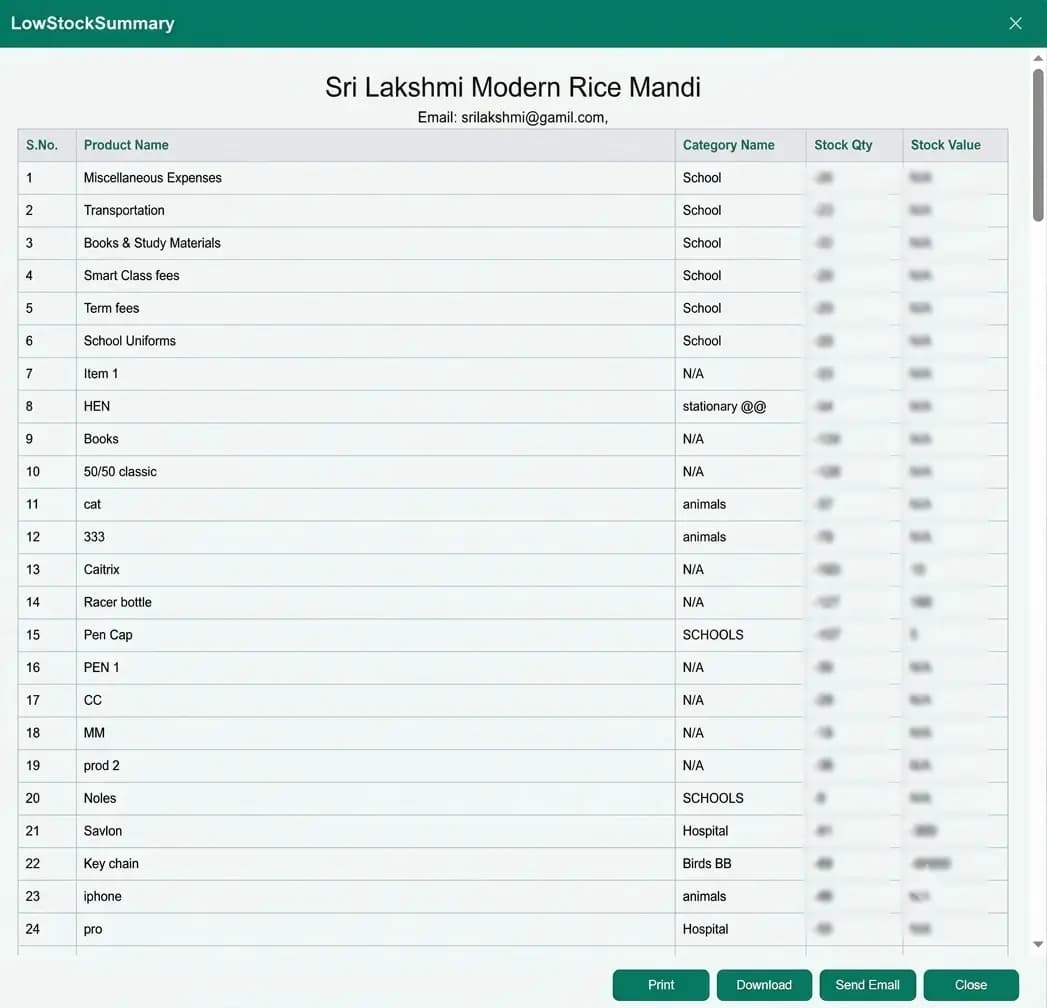
A low stock report is a critical inventory management tool that identifies products with stock levels approaching or below predetermined minimum thresholds. This report helps businesses proactively manage inventory, prevent stockouts, and maintain optimal stock levels to meet customer demand without overstocking.
By providing real-time visibility into inventory levels, low stock reports enable businesses to automate reordering processes, reduce carrying costs, and ensure that popular products are always available for customers, directly impacting revenue and customer satisfaction.
Key Components of a Low Stock Report
Product Information
Detailed product names, SKU numbers, descriptions, and categories for easy identification and tracking.
Current Stock Levels
Real-time inventory quantities showing exactly how many units are available for each product.
Reorder Points
Predetermined minimum stock levels that trigger reorder alerts when inventory falls below.
Stock Status Indicators
Visual alerts (Critical, Low, Warning) to prioritize urgent reordering needs.
Location Tracking
Warehouse or store locations where low stock items are stored for efficient replenishment.
Usage Trends
Historical consumption patterns and seasonal demand to optimize reorder quantities.
Why Low Stock Management is Critical for Your Business
Effective low stock management directly impacts your business profitability and customer satisfaction:
- Prevent Stockouts: Ensure popular products are always available to avoid lost sales and customer frustration.
- Reduce Holding Costs: Optimize inventory levels to minimize storage, insurance, and obsolescence costs.
- Improve Cash Flow: Free up working capital by maintaining optimal stock levels, not excess inventory.
- Enhance Customer Satisfaction: Maintain high service levels with consistent product availability.
- Automate Reordering: Set up automated purchase orders when stock reaches reorder points.
- Optimize Supplier Relationships: Place timely orders and maintain better supplier relationships.
- Reduce Emergency Purchases: Avoid expensive last-minute orders and rush shipping fees.
- Enable Data-Driven Decisions: Make informed purchasing decisions based on usage patterns and trends.
Best Practices for Maintaining Accurate Low Stock Reports
Set Appropriate Reorder Points
Calculate reorder points based on lead time, demand variability, and safety stock requirements.
Regular Physical Counts
Conduct cycle counts and regular physical inventory audits to ensure system accuracy.
Use ABC Analysis
Prioritize high-value items (A items) with more frequent monitoring and tighter controls.
Track Lead Times
Monitor supplier lead times to adjust reorder points accordingly and prevent stockouts.
Analyze Seasonal Trends
Adjust reorder points seasonally based on historical demand patterns and promotions.
Leverage Technology
Use automated inventory management software with real-time tracking and alert capabilities.
Take Control of Your Inventory Management
Effective low stock management is essential for maintaining operational efficiency and maximizing profitability. With the right tools and insights, you can optimize your inventory levels, prevent stockouts, reduce carrying costs, and ensure your customers always find what they're looking for. Start monitoring your low stock items today and transform your inventory management.
Understanding Low Stock Reports for Business Growth
A low stock report is an essential inventory management tool that provides real-time visibility into products approaching critical stock levels. By identifying items that need reordering before they run out, businesses can prevent lost sales, maintain customer satisfaction, and optimize working capital. Modern inventory management systems automate the tracking of stock levels, providing instant alerts and actionable insights for efficient inventory control.
01. What is a Low Stock Report?
A low stock report is a detailed inventory document that lists products with stock levels below predetermined minimum thresholds. It includes essential information such as product names, SKU numbers, current quantities, reorder points, and stock status indicators. This report serves as an early warning system, alerting businesses to items that need immediate attention to prevent stockouts and ensure continuous availability of popular products.
02. How to Use a Low Stock Report
Using a low stock report effectively involves reviewing it regularly, prioritizing items based on their status (Critical > Low > Warning), and taking immediate action on critical items. The report should be integrated with your purchasing process to automatically generate purchase orders when items reach reorder points. Additionally, analyzing historical trends in the report helps optimize reorder quantities and timing for different products.
03. Why Businesses Need Low Stock Reports
Businesses need low stock reports to maintain optimal inventory levels, prevent revenue loss from stockouts, and reduce holding costs associated with excess inventory. These reports provide actionable insights for purchasing decisions, help maintain customer loyalty through consistent product availability, and enable better cash flow management by optimizing working capital tied up in inventory.
04. Key Benefits of Using Low Stock Reports
Key benefits include preventing lost sales and customer dissatisfaction, reducing emergency purchasing costs, optimizing storage space and carrying costs, improving supplier negotiations with better ordering patterns, and providing data-driven insights for strategic inventory planning. Low stock reports also enable businesses to maintain competitive advantage through better product availability.
05. How Low Stock Reports Support Financial Analysis
Low stock reports support financial analysis by providing data on inventory turnover rates, carrying costs, and potential revenue opportunities. They help calculate optimal stock levels that balance service levels with holding costs, identify slow-moving inventory that ties up capital, and support working capital optimization through better inventory management decisions.
✓ Effective low stock management is essential for optimizing inventory, preventing stockouts, and driving business growth.