TDS Receivable
Track Your Tax Deductions
Monitor all TDS (Tax Deducted at Source) amounts receivable from your clients. Get real-time visibility into pending TDS collections, track due dates, and ensure timely tax compliance to avoid penalties and interest charges.
Real-time Tracking
Live updates
Due Date Alerts
Never miss deadlines
Auto-Reconciliation
Smart matching
Tax Compliance
Stay compliant
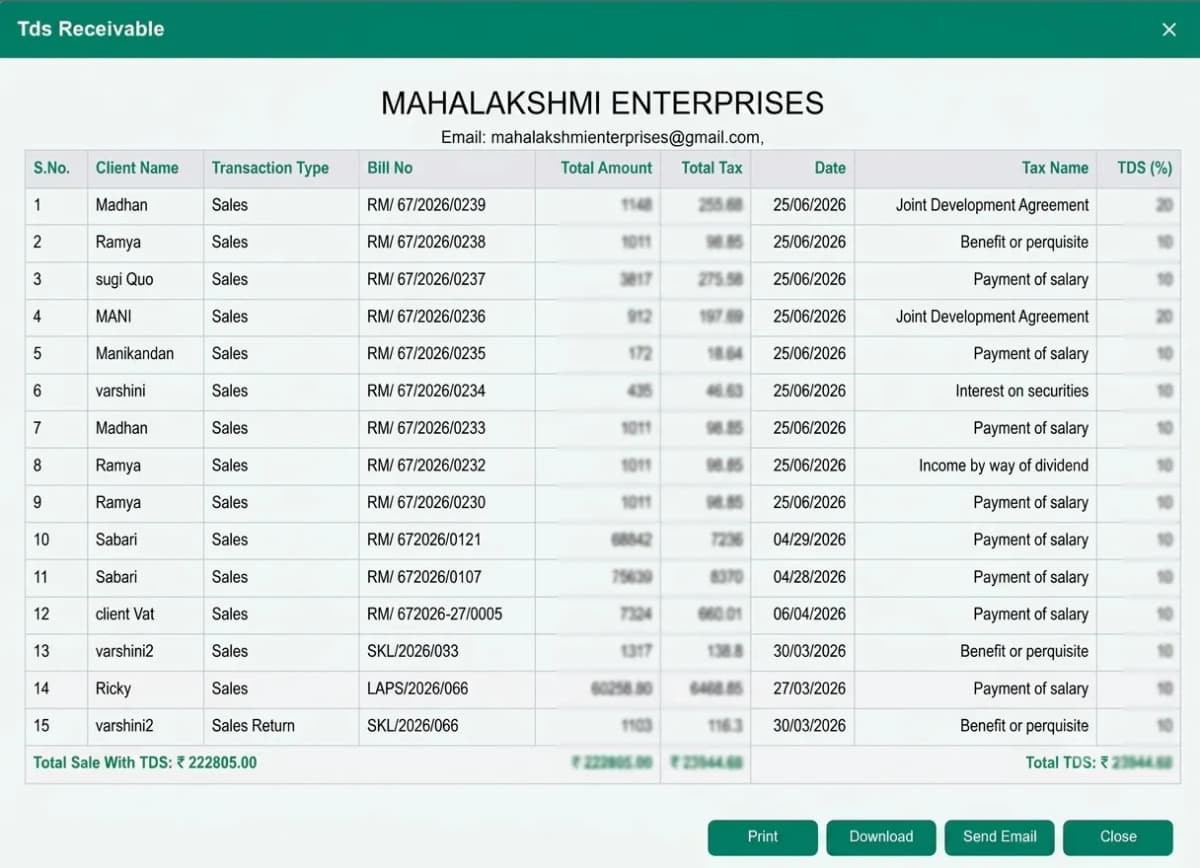
Everything You Need to Manage TDS Receivables Efficiently
Track TDS Receivables
Monitor all TDS amounts receivable from clients in real-time.
Tax Compliance
Ensure timely TDS filing and avoid penalties.
Due Date Tracking
Never miss a TDS payment deadline with automated reminders.
Detailed Reports
Generate comprehensive TDS receivable statements.
Auto-Reconciliation
Automatically reconcile TDS receipts with invoices.
Master Your TDS Receivable Management
What is a TDS Receivable Report?
A TDS (Tax Deducted at Source) Receivable Report is a comprehensive financial document that tracks all TDS amounts that are due to be received from various clients or deductors. When a client deducts TDS from your invoice payment, that amount becomes a TDS receivable for your business. This report helps you monitor these amounts, track collection status, and ensure timely compliance with tax regulations.
How to Use a TDS Receivable Report
Using a TDS receivable report effectively involves tracking all TDS deductions made by clients, monitoring due dates for claiming these amounts, and ensuring timely reconciliation with your tax filings. The report provides a clear overview of pending TDS, received amounts, and overdue collections, helping you take proactive action to recover outstanding TDS and maintain accurate financial records.
Why Businesses Need TDS Receivable Management
Effective TDS receivable management is crucial for maintaining financial health and tax compliance:
- Ensure Tax Compliance: Track TDS deductions to file accurate tax returns and avoid penalties.
- Optimize Cash Flow: Recover TDS amounts promptly to improve your working capital position.
- Avoid Interest Charges: Timely collection of TDS prevents interest on delayed tax payments.
- Maintain Accurate Records: Keep precise records of all TDS transactions for audit purposes.
- Strengthen Client Relationships: Professional TDS management builds trust with clients.
- Reduce Financial Risk: Identify overdue TDS and take corrective action proactively.
- Improve Financial Planning: Better visibility into TDS receivables for accurate forecasting.
- Simplify Reconciliation: Easy matching of TDS with invoices and bank statements.
Key Benefits of Using a TDS Receivable Report
Real-time Visibility
Get instant access to all TDS receivables with current status, amounts, and due dates at a glance.
Automated Tracking
Automatically track TDS deductions from invoices and maintain accurate records without manual effort.
Due Date Management
Never miss a TDS filing deadline with automated reminders and alerts for pending receivables.
Tax Compliance Assurance
Ensure 100% tax compliance by tracking all TDS deductions and filing accurate returns on time.
Enhanced Cash Flow
Recover TDS amounts quickly to improve your cash flow and working capital position.
Detailed Reporting
Generate comprehensive TDS reports for internal analysis, audits, and regulatory submissions.
Important Components of a TDS Receivable Report
Client/Deductor Details
Complete information of clients who have deducted TDS, including name, PAN, and contact details.
Invoice Information
Reference invoice numbers, dates, and amounts on which TDS was deducted.
TDS Amount
The actual amount of TDS deducted from each invoice, including the applicable rate.
Due Dates
Important deadlines for claiming TDS and filing quarterly returns.
Status Tracking
Current status of each TDS receivable - Received, Pending, or Overdue.
Reconciliation Details
Bank reconciliation information showing matching of TDS receipts with invoices.
How TDS Receivable Report Helps in Financial Analysis
A comprehensive TDS receivable report provides valuable insights for financial analysis and strategic decision-making:
- ✓Liquidity Assessment: Understand the amount of TDS receivable and its impact on your working capital position.
- ✓Tax Planning: Use TDS receivable data to plan your tax payments and optimize cash utilization.
- ✓Risk Assessment: Identify clients with overdue TDS and assess potential collection risks.
- ✓Performance Tracking: Monitor TDS collection efficiency and identify areas for improvement.
- ✓Compliance Verification: Ensure all TDS deductions are properly accounted for in tax filings.
Best Practices for Maintaining Accurate TDS Receivable Records
Regular Reconciliation
Match TDS receivables with invoices and bank statements monthly to ensure accuracy.
Timely Follow-ups
Send automated reminders to clients for pending TDS amounts and follow up proactively.
Accurate Documentation
Maintain proper documentation for all TDS transactions including TDS certificates.
Use Technology Solutions
Leverage TDS management software for automated tracking and reconciliation.
Regular Reporting
Generate monthly TDS receivable reports for management review and decision-making.
Tax Filing Compliance
File TDS returns on time using accurate data from your receivable reports.
Understanding TDS Receivable Report for Business Growth
A TDS receivable report is more than just a tax compliance tool—it's a strategic asset for business growth. By maintaining accurate records of TDS deductions and receivables, businesses can optimize cash flow, ensure regulatory compliance, and build stronger financial foundations. Proper TDS management demonstrates professional financial practices and builds trust with clients, contributing to long-term business success and sustainable growth.
01. Strategic Tax Planning
TDS receivable data provides essential insights for strategic tax planning. By understanding your TDS receivable position, you can optimize tax payments, avoid interest charges, and maintain healthy cash flow. Regular analysis of TDS data helps identify patterns in client deductions and enables proactive tax management.
02. Cash Flow Optimization
Timely collection of TDS amounts contributes to better cash flow management. By tracking TDS receivables systematically, businesses can forecast cash inflows more accurately and plan working capital requirements effectively. This leads to improved liquidity and financial stability.
03. Compliance and Risk Management
Maintaining accurate TDS receivable records ensures full compliance with tax regulations and reduces the risk of penalties. Regular reconciliation of TDS data with tax filings helps identify discrepancies early and maintains transparency in financial reporting.
04. Client Relationship Management
Professional TDS management builds client confidence and strengthens business relationships. By providing accurate TDS certificates and maintaining transparent communication about deductions, businesses demonstrate reliability and financial professionalism.
05. Technology Integration for Efficiency
Modern TDS management solutions automate tracking, reconciliation, and reporting processes. These technologies reduce manual errors, save time, and provide real-time visibility into TDS receivables. By leveraging technology, businesses can focus on strategic growth initiatives rather than administrative tasks.
✓ Effective TDS receivable management is essential for tax compliance, financial health, and sustainable business growth.