GSTR-2 Summary
Simplify Your Tax Compliance
Get a complete overview of your GST liabilities and input tax credits. Track every transaction, ensure compliance with GST regulations, and optimize your tax position with real-time summary reports.
Real-time Tracking
Live updates
Auto Reconciliation
Smart matching
Quick Filing
One-click returns
Secure Data
Bank-grade
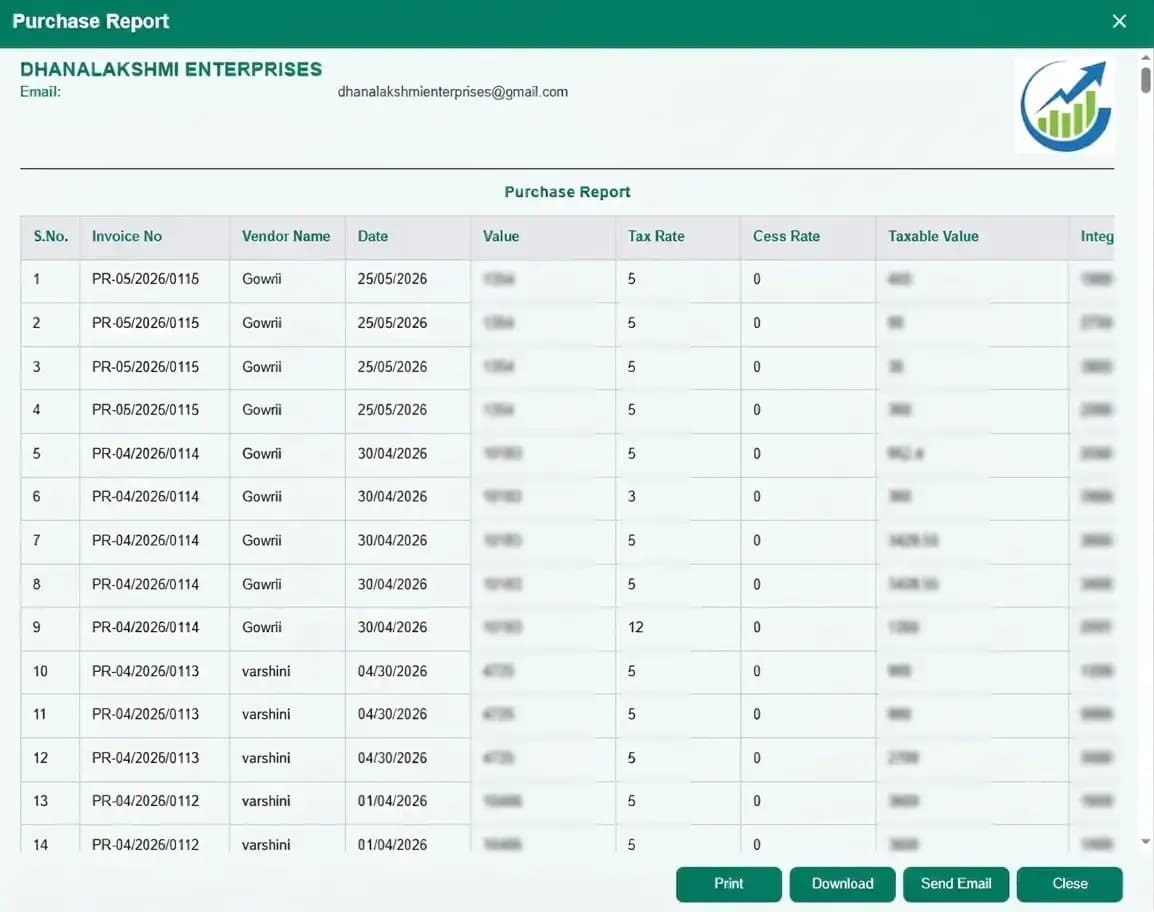
Everything You Need to Manage GST Compliance Efficiently
GST Summary Reports
Comprehensive GST liability and input credit summaries.
Compliance Tracking
Stay compliant with GST regulations effortlessly.
Tax Analysis
Analyze GST patterns and optimize tax positions.
Detailed Reports
Generate GST reconciliation and summary reports.
Automated Updates
Auto-sync with sales and purchase data for accuracy.
Complete Guide to
GST Summary Reports
Everything you need to know about GST summary reports, compliance, and best practices
What is a GST Summary Report?
A GST Summary Report is a comprehensive document that provides a consolidated view of all your GST-related transactions, liabilities, and input tax credits. It summarizes your GST obligations for a specific period, helping you understand your tax position, ensure compliance with GST regulations, and make informed financial decisions.
Quick Facts
- Consolidates all GST transactions
- Shows tax liability & credits
- Essential for compliance
- Helps avoid penalties
How to Use a GST Summary Report
- Review total taxable value and GST liability for the period
- Verify input tax credit claims and ensure eligibility
- Check for any discrepancies between sales and purchase data
- Use the report to plan tax payments and cash flow
- File GST returns accurately using the summary data
Why Businesses Need It
- Ensure compliance with GST regulations
- Avoid penalties and interest charges
- Optimize input tax credit claims
- Make informed financial decisions
- Build trust with stakeholders and investors
Key Benefits of Using a GST Summary Report
Compliance
Stay compliant with GST laws
Tax Optimization
Maximize input tax credits
Better Planning
Plan cash flows effectively
Risk Management
Minimize audit risks
Important Components Included in a GST Summary Report
Taxable Value Summary
Total value of all taxable supplies categorized by GST rates
CGST & SGST Breakdown
Detailed split of Central GST and State GST components
Input Tax Credit (ITC)
Summary of GST paid on purchases that can be claimed as credit
Net GST Liability
Final tax payable after adjusting input tax credits
How It Helps in Financial Analysis & Decision-Making
Best Practices for Maintaining Accurate GST Summary Reports
Regular Reconciliation
Reconcile returns with books monthly
Accurate Invoice Matching
Match invoices for correct ITC claims
Timely Return Filing
File returns by the due date
Maintain Documentation
Keep all GST records organized
Use Technology Solutions
Automate tracking and filing
Regular Tax Planning
Plan GST liability in advance
Understanding GST Summary for Business Growth
A GST summary report is a vital financial document that provides a consolidated overview of your GST transactions and tax liability. It helps businesses monitor tax compliance, optimize input tax credit claims, and make informed financial decisions. Modern GST software automates the generation of these reports, providing real-time visibility into your tax position and supporting better financial planning and compliance management.
01. Understanding GST Liability
GST liability represents the total tax payable to the government on taxable supplies made during a period. It is calculated by applying the applicable GST rate to the taxable value of each supply. The total liability is then reduced by the input tax credit (ITC) available on purchases and expenses. Understanding your GST liability helps you plan your cash flows, ensure timely payments, and avoid interest charges for delayed payments.
02. Input Tax Credit (ITC) Management
Input tax credit is the GST paid on purchases and expenses that can be claimed as a credit against your GST liability. Effective ITC management involves matching purchase invoices with supplier returns, ensuring all eligible credits are claimed, and maintaining proper documentation. Maximizing ITC claims reduces your net GST liability, improves cash flow, and ensures compliance with GST regulations.
03. GST Return Filing Process
The GST return filing process involves submitting details of sales, purchases, and tax paid to the government. Key returns include GSTR-1 (outward supplies), GSTR-3B (summary return with tax payment), and GSTR-9 (annual return). Timely and accurate filing of these returns is crucial for maintaining compliance, avoiding penalties, and ensuring smooth business operations.
04. GST Reconciliation Best Practices
Reconciliation of GST returns with books of accounts is essential for identifying discrepancies, ensuring accurate tax reporting, and minimizing audit risks. Best practices include monthly reconciliation, matching purchase invoices with supplier data, verifying ITC claims, and maintaining proper documentation. Regular reconciliation helps you detect errors early and ensures your tax compliance remains accurate and up-to-date.
05. Using Technology for GST Compliance
Modern GST software provides powerful tools for automating GST tracking, generating summary reports, and filing returns. These solutions integrate with sales and purchase data, automatically calculate tax liability, and provide real-time insights into your tax position. By leveraging technology, you can reduce manual errors, save time, and ensure accurate GST compliance that supports business growth and financial stability.
Effective GST summary management is the foundation of tax compliance, enabling you to optimize tax efficiency, ensure compliance, and achieve long-term business success.