GSTR-1 Summary
Simplify Your GST Filing
Streamline your GSTR-1 filing process with automated invoice summaries, accurate tax calculations, and real-time compliance tracking. Generate error-free returns and stay compliant with GST regulations effortlessly.
Auto-Generate
Error-free returns
Real-time Tracking
Live compliance status
Instant Filing
One-click submission
Secure & Compliant
GST certified
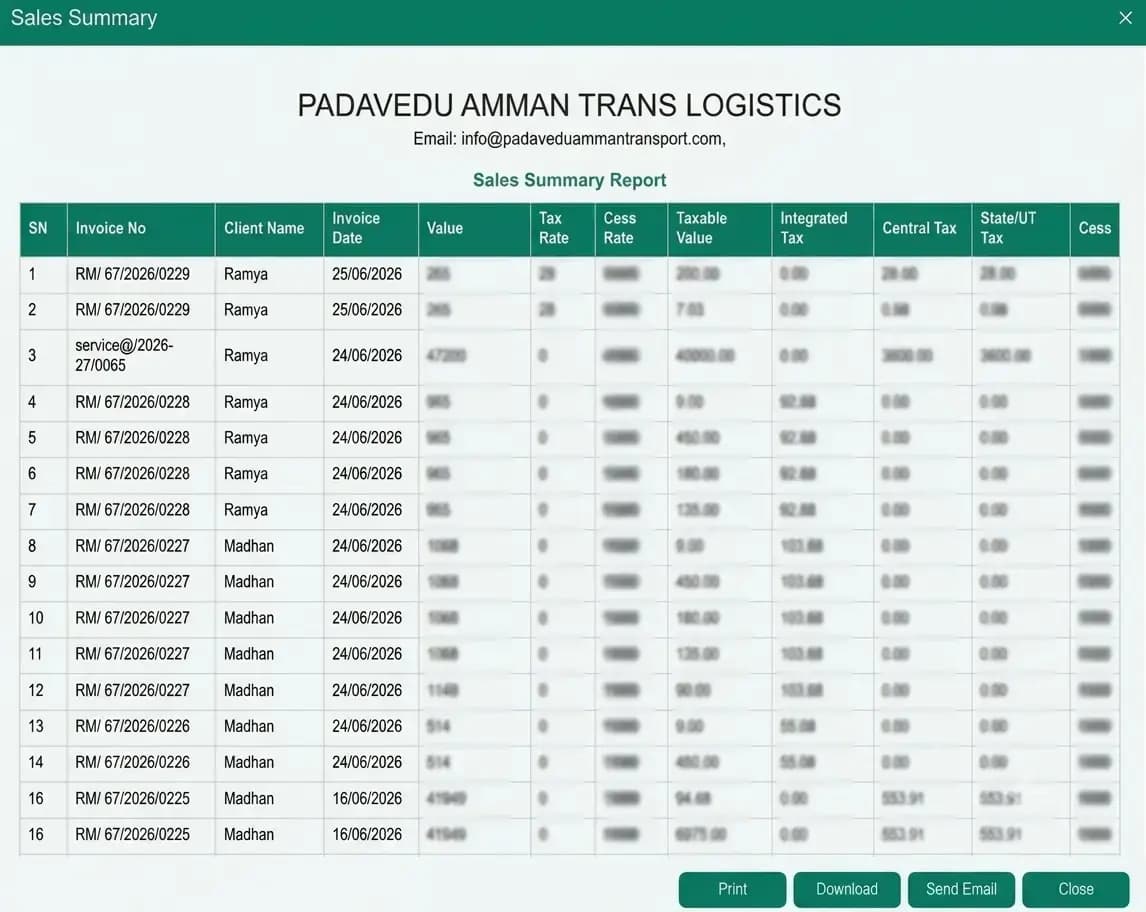
Everything You Need to Manage GSTR-1 Filing Efficiently
Generate GSTR-1
Auto-generate GSTR-1 returns with accurate data.
Tax Calculations
Automated tax computations with error-free results.
Analytics Dashboard
Visual insights into your GST compliance status.
Filing Reminders
Never miss a filing deadline with smart alerts.
Export Reports
Download GSTR-1 reports in multiple formats.
Master Your GSTR-1 Filing Process
GSTR-1 is a crucial monthly or quarterly return that businesses registered under GST must file to report all outward supplies made during the period. It contains details of all invoices issued for sales, including B2B and B2C transactions, debit notes, credit notes, and export invoices. A GSTR-1 summary report provides a consolidated view of these outward supplies, helping businesses ensure accurate and timely filing while maintaining full compliance with GST regulations.
Whether you're a small business owner or managing a large enterprise, having a well-organized GSTR-1 summary report helps you avoid penalties, claim input tax credits accurately, and maintain a healthy compliance status. With automated tools, you can generate these reports in minutes, complete with all necessary details for seamless filing on the GST portal.
Key Components of a GSTR-1 Summary Report
Invoice Details
Complete list of all invoices issued during the period, including invoice numbers, dates, and buyer information. Ensures complete tracking of all outward supplies.
Taxable Value & Tax Amount
Breakdown of taxable values and applicable GST amounts (CGST, SGST, or IGST) for each invoice. Essential for accurate tax liability calculation.
B2B vs B2C Classification
Clear segregation of Business-to-Business and Business-to-Consumer transactions, as different rules apply for reporting and filing.
Export & Debit/Credit Notes
Comprehensive listing of export invoices, along with any debit notes, credit notes, or amendments made during the filing period.
HSN/SAC Code Summary
Categorized summary of goods and services with their respective HSN or SAC codes for proper classification and tax rate application.
Filing Status & Compliance
Real-time tracking of filing status, due dates, and compliance history to ensure timely submission and avoid penalties.
Why a GSTR-1 Summary Report is Essential for Your Business
A comprehensive GSTR-1 summary report provides numerous benefits for your business:
- Ensure Accurate Filing: Avoid errors and discrepancies in your GST returns with automated invoice verification.
- Claim ITC Correctly: Enable accurate Input Tax Credit claims by ensuring all purchase invoices are properly recorded.
- Avoid Penalties: File on time with timely reminders and reduce the risk of late filing penalties.
- Simplify Tax Audits: Maintain organized records that make tax audits smooth and stress-free.
- Improve Cash Flow: Plan tax payments in advance with accurate tax liability calculations.
- Strengthen Business Credibility: Build trust with buyers and authorities through consistent compliance.
- Save Time & Effort: Automate the entire GSTR-1 filing process with smart technology solutions.
- Real-time Compliance: Monitor your compliance status in real-time and take corrective action instantly.
Best Practices for Maintaining Accurate GSTR-1 Summary Reports
Regular Reconciliation
Reconcile your GSTR-1 with purchase records and sales books monthly to catch discrepancies early.
Automated Invoice Generation
Use GST-compliant invoicing software that automatically captures all required details for GSTR-1.
Timely Data Entry
Enter sales data promptly to avoid last-minute rushes and ensure complete transaction recording.
Verify HSN/SAC Codes
Ensure correct HSN/SAC codes are applied to all products and services for accurate tax calculation.
Monitor Filing Deadlines
Track GST filing due dates and set reminders to avoid late fees and compliance penalties.
Review Debit/Credit Notes
Review and include all debit and credit notes issued during the period for complete reporting.
Streamline Your GSTR-1 Filing Process Today
A well-maintained GSTR-1 summary report is your key to hassle-free GST compliance and accurate tax filing. By adopting automated tools and following best practices, you can eliminate manual errors, save valuable time, and ensure your business remains compliant with all GST regulations. Start leveraging the power of automated GSTR-1 reporting to unlock efficiency and drive business growth.
Understanding GSTR-1 Summary for Business Growth
A GSTR-1 summary report is more than just a compliance requirement—it's a strategic tool for understanding your business's sales performance and tax obligations. This report provides a comprehensive view of all outward supplies, including B2B, B2C, export, and deemed export transactions, along with the corresponding tax liabilities. By regularly analyzing your GSTR-1 summary, you can identify sales trends, optimize pricing strategies, and maintain a strong compliance history that supports business growth. Modern GST software automates the generation of these reports, ensuring accuracy, efficiency, and real-time visibility into your tax position.
01. What is a GSTR-1 Summary Report?
A GSTR-1 summary report is a consolidated statement that provides a detailed overview of all outward supplies made by a registered taxpayer during a specific tax period (monthly or quarterly). It includes information about invoices issued, debit and credit notes, export invoices, and HSN/SAC-wise summary of goods and services. This report is crucial for accurately filing the GSTR-1 return on the GST portal, ensuring that all sales transactions are reported correctly and on time.
02. How to Use a GSTR-1 Summary Report Effectively
To use a GSTR-1 summary report effectively, start by reconciling it with your sales records to ensure completeness and accuracy. Review the invoice-level details, verify the tax rates and amounts, and cross-check the HSN/SAC codes for correct classification. Use the report to identify any missing invoices or mismatches, and resolve them before filing. Additionally, analyze the B2B and B2C split to understand your customer base and plan your credit management strategies accordingly.
03. Why Businesses Need a GSTR-1 Summary Report
Businesses need a GSTR-1 summary report for several critical reasons. First, it ensures compliance with GST regulations and helps avoid penalties for non-filing or incorrect filing. Second, it enables accurate calculation of tax liabilities, allowing businesses to plan their cash flow for tax payments. Third, it facilitates input tax credit claims by providing a clear trail of sales transactions. Fourth, it serves as a valuable analytical tool to track sales performance, customer trends, and product profitability.
04. Key Benefits of Using a GSTR-1 Summary Report
Using a GSTR-1 summary report offers numerous benefits for business operations. It automates the tedious manual work of compiling invoice data, reducing errors and saving valuable time. It provides real-time visibility into your sales and tax position, enabling proactive financial management. It simplifies the filing process, ensuring timely submissions and avoiding late fees. It also enhances audit readiness by maintaining organized, complete records of all outward supplies, making tax audits and inspections smooth and hassle-free.
05. Best Practices for Maintaining Accurate GSTR-1 Summary Reports
Maintaining accurate GSTR-1 summary reports requires implementing several best practices. Use GST-compliant invoicing software that automatically captures all required fields for GSTR-1 filing. Perform regular reconciliation of sales books with GSTR-1 data to identify and correct discrepancies promptly. Verify HSN/SAC codes and tax rates for all products and services to ensure correct reporting. Set up reminders for filing deadlines to avoid last-minute rushes. Finally, include all debit and credit notes, export invoices, and amendments in your report for complete and accurate filing.
06. Understanding GSTR-1 Summary for Business Growth
A thorough understanding of your GSTR-1 summary report can be a catalyst for business growth. By analyzing the patterns in your sales data, you can identify your most profitable products, top-performing customer segments, and seasonal trends in demand. This insight enables you to make informed decisions about product development, marketing strategies, and resource allocation. Additionally, maintaining a clean compliance record through accurate GSTR-1 filings enhances your business credibility with banks, financial institutions, and potential investors, opening doors to better financing opportunities.
✓ Effective GSTR-1 management is the foundation of GST compliance, enabling you to file accurately, claim ITC confidently, and drive business growth with complete tax transparency.