Expense Management
Software for Small Business
Take control of your business finances with powerful expense management software. Track, categorize, and analyze every expense in real-time. Make informed decisions, reduce costs, and drive growth with complete visibility into your spending.
Real-Time Tracking
Live Expense Updates
Smart Categories
Auto-Organization
Budget Alerts
Stay on Track
Secure & Reliable
Bank-Grade Security
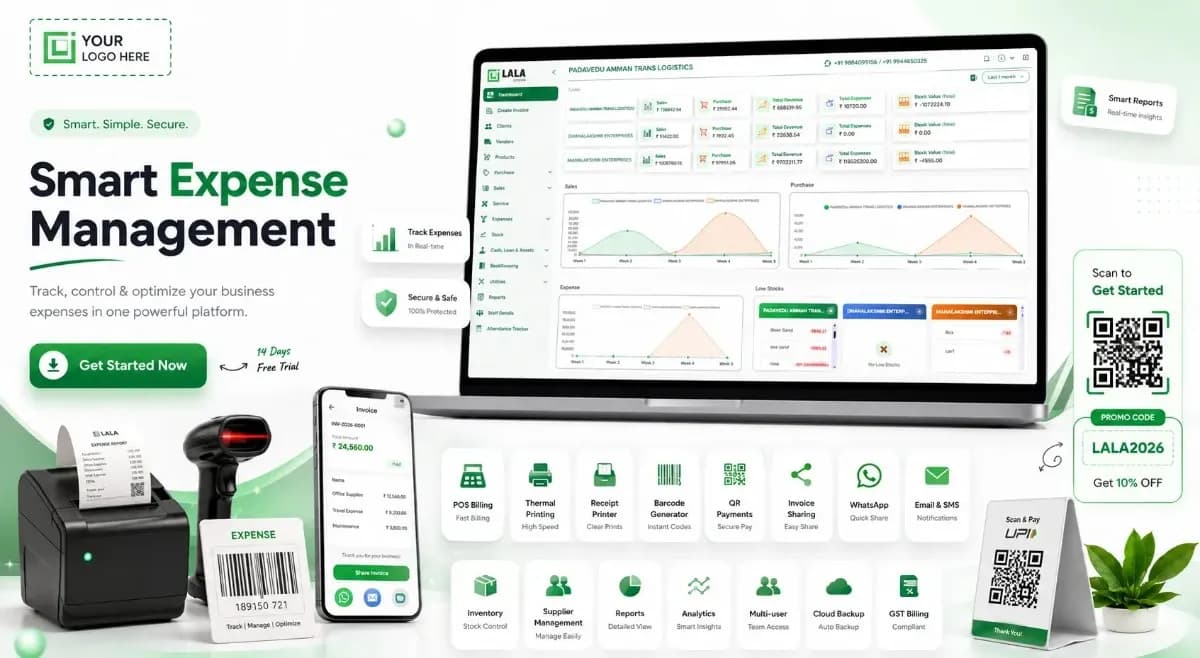
Everything You Need to Manage Business Expenses Efficiently
Track Expenses
Log and categorize every business expense effortlessly.
Smart Categorization
Auto-categorize expenses for better organization.
Budget Management
Set budgets and get alerts when you're close to limits.
Expense Reports
Generate detailed reports for analysis and tax filing.
Receipt Scanning
Scan and attach receipts to expenses instantly.
What is Expense Management Software
Automate expense tracking, gain financial clarity, and optimize spending for your small business
Automated Expense Tracking
Expense management software is a digital solution designed to help small businesses track, categorize, and analyze all business expenses. It automates the entire expense lifecycle—from capture to reporting—eliminating manual spreadsheets and paper receipts.
Real-Time Financial Visibility
By centralizing all expense data in one platform, expense management software provides business owners with real-time visibility into spending patterns. This enables better cash flow management, smarter budgeting, and data-driven decisions that drive profitability.
How Expense Management Software Works
Capture Expenses Instantly
Log expenses as they happen using mobile apps or web interface. Simply enter the amount, select a category, and upload receipt photos for documentation.
Auto-Categorization & Organization
The software automatically categorizes expenses (travel, supplies, utilities, etc.) using AI, making it easy to see exactly where your money is going.
Budget Tracking & Alerts
Set budgets for different categories and get real-time alerts when you're approaching or exceeding limits, helping you stay in control of spending.
Generate Reports & Insights
Access detailed expense reports, spending trends, and financial insights that help you make informed business decisions and simplify tax preparation.
Why Small Businesses Need Expense Management Software
Implementing expense management software provides small businesses with crucial advantages that directly impact profitability and growth:
Benefits of Expense Management for Small Business
Time Savings
Automate manual expense tracking and reduce data entry time by up to 80%.
Cost Reduction
Identify unnecessary spending and optimize costs with detailed expense insights.
Better Cash Flow
Manage cash flow effectively with real-time visibility into expenses and budgets.
Tax Compliance
Maintain organized expense records for easy tax filing and audit readiness.
Fraud Prevention
Monitor spending patterns and detect unusual activities with automated alerts.
Data-Driven Decisions
Make informed business decisions with comprehensive expense analytics and insights.
How Expense Management Helps in Financial Analysis
Spending Pattern Analysis
Track spending trends over time to identify seasonal patterns, cost drivers, and areas where you can negotiate better rates with suppliers.
Budget Variance Tracking
Compare actual expenses against budgets to identify variances, adjust spending, and improve financial planning accuracy.
Profitability Analysis
Analyze expenses by project, client, or department to determine profitability and make informed resource allocation decisions.
Cost Optimization Opportunities
Identify unnecessary or duplicate expenses, negotiate better vendor contracts, and implement cost-saving measures based on data insights.
Maintaining Accurate Expense Management
1. Establish Clear Expense Policies
Define clear guidelines for what constitutes a business expense, spending limits, approval workflows, and documentation requirements. Communicate these policies to all employees to ensure consistency.
2. Implement Real-Time Tracking
Encourage employees to log expenses as they occur using mobile apps or web interfaces. This prevents forgotten expenses, reduces errors, and provides up-to-date financial visibility.
3. Use Smart Categorization
Create a well-defined expense categorization system that aligns with your accounting structure and tax reporting needs. Use the software's auto-categorization features to save time.
4. Review Expenses Regularly
Schedule regular expense reviews to identify trends, catch errors early, and ensure spending stays within budget. Weekly or monthly reviews help maintain financial control.
5. Integrate with Accounting Systems
Connect your expense management software with your accounting platform for seamless data flow, accurate financial statements, and simplified tax preparation.
6. Automate Approval Workflows
Set up automated approval workflows for expense submissions to ensure compliance with company policies and reduce approval delays.
Understanding Expense Management Software Growth
Expense management software has become an essential tool for growing small businesses. As your business expands, managing expenses manually becomes increasingly complex and error-prone. Modern expense management solutions scale with your business, providing the infrastructure needed to maintain financial control as you grow.
The expense management software market continues to evolve with AI-powered features, mobile-first design, and seamless integrations with accounting platforms. By adopting these solutions early, small businesses position themselves for sustainable growth with strong financial foundations and data-driven decision-making capabilities.
Essential Components of an Expense Management System
Expense Tracking & Recording
The core functionality that allows users to log expenses manually or automatically via bank feeds, with support for multiple currencies and tax calculations.
Receipt Management
Digital receipt capture and storage with OCR technology that extracts relevant data (amount, date, vendor) from receipt images, reducing manual data entry.
Category Management
Customizable expense categories (travel, supplies, utilities, etc.) with sub-categories for detailed tracking and reporting aligned with your chart of accounts.
Budget Creation & Tracking
Set budgets by category, department, or project with real-time tracking and automated alerts when approaching or exceeding limits.
Approval Workflows
Define approval hierarchies and automated routing for expense submissions, ensuring compliance with company policies and internal controls.
Reporting & Analytics
Comprehensive reports on spending patterns, budget variance, tax deductions, and financial insights that support strategic decision-making.