Digital Transformation
Empowering Small Business Growth
Digital transformation is the process of integrating digital technology into all areas of your business, fundamentally changing how you operate and deliver value to customers.
Innovation First
Cutting-edge solutions
Scalable Growth
Built for expansion
Efficiency Gains
Optimized operations
Secure & Reliable
Enterprise-grade security
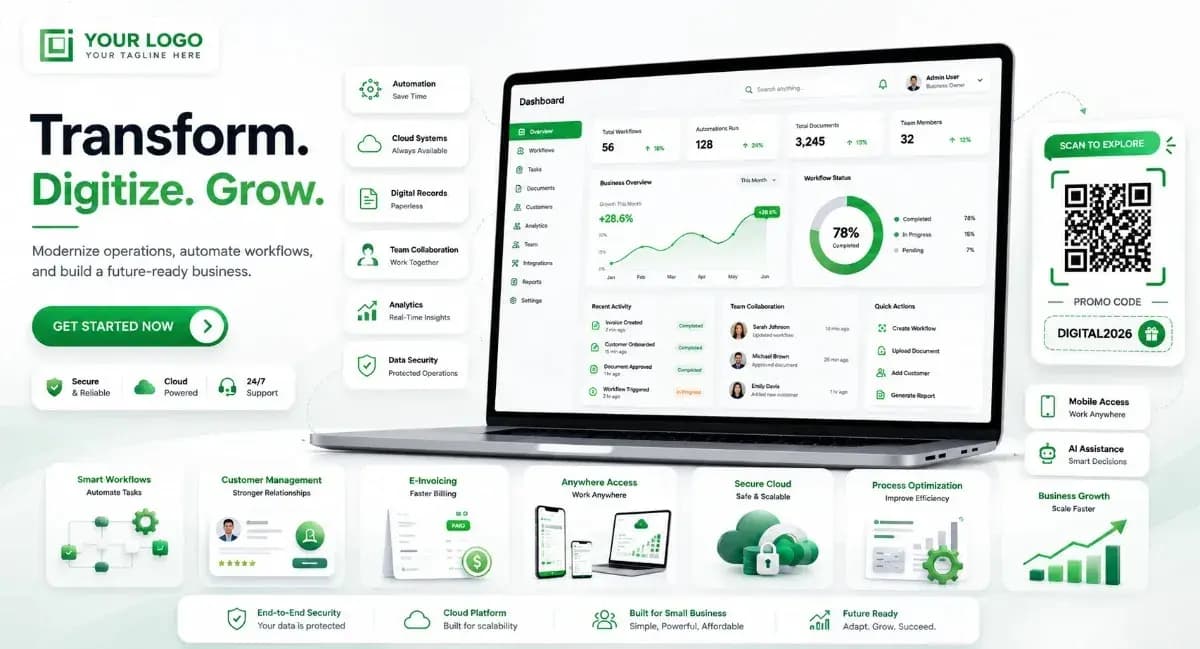
Everything You Need to Drive Digital Transformation Successfully
Digital Strategy
Develop a comprehensive digital roadmap for your business.
Process Automation
Automate repetitive tasks and streamline operations.
Data-Driven Decisions
Leverage analytics for informed business choices.
Cloud Integration
Seamless cloud solutions for remote accessibility.
Customer Experience
Enhance engagement through digital channels.
Master Your Digital Transformation Journey
🚀 What is Digital Transformation for Small Business?
Digital transformation for small businesses is the strategic integration of digital technologies into every aspect of business operations. It's not just about adopting new tools—it's about fundamentally rethinking how your business operates, delivers value, and engages with customers in the digital age.
Unlike simply digitizing existing processes, digital transformation represents a cultural and operational shift. It involves leveraging technologies like cloud computing, artificial intelligence, data analytics, and automation to create new revenue streams, improve efficiency, and enhance customer experiences. For small businesses, it's a journey toward becoming more agile, data-driven, and competitive in an increasingly digital marketplace.
📝 How to Use Digital Transformation for Your Business
- Assess Current State: Evaluate your current processes, technologies, and digital capabilities to identify areas for improvement.
- Define Clear Goals: Set specific, measurable objectives for your digital transformation initiatives.
- Develop a Strategic Roadmap: Create a phased plan that prioritizes high-impact initiatives and aligns with business goals.
- Invest in Technology: Choose the right digital tools and platforms that address your specific business needs.
- Build Digital Skills: Train your team to effectively use new technologies and embrace digital-first thinking.
- Monitor and Iterate: Continuously measure results, gather feedback, and refine your digital strategy.
🎯 Why Small Businesses Need Digital Transformation
- Staying Competitive: Digital transformation enables small businesses to compete with larger enterprises by leveling the playing field.
- Customer Expectations: Modern customers expect seamless digital experiences and personalized interactions.
- Operational Efficiency: Digital tools automate manual processes, reducing errors and freeing up resources for strategic work.
- Data-Driven Decisions: Digital transformation provides access to real-time data and analytics for better decision-making.
- Scalability: Digital systems make it easier to scale operations and adapt to changing market conditions.
- Innovation and Agility: Digital transformation fosters a culture of innovation and allows businesses to pivot quickly when needed.
✨ Key Benefits of Digital Transformation for Small Business
- Increased Efficiency: Automate routine tasks and streamline workflows to do more with less.
- Enhanced Customer Experience: Deliver personalized, omnichannel experiences that build loyalty.
- Improved Agility: Respond faster to market changes and customer needs with flexible digital systems.
- Data-Driven Insights: Leverage analytics to make informed decisions and identify growth opportunities.
- Cost Savings: Reduce operational costs through automation, cloud computing, and optimized processes.
- Competitive Advantage: Differentiate your business through innovative digital capabilities and services.
Important Components of Digital Transformation for Small Business
Cloud Computing
Migrate to cloud-based platforms for scalable infrastructure, remote access, and cost-effective solutions that grow with your business.
Process Automation
Implement automation tools to streamline repetitive tasks, reduce manual errors, and free up team members for higher-value activities.
Data Analytics
Leverage advanced analytics to gain actionable insights from customer data, operational metrics, and business performance indicators.
Customer Engagement
Adopt digital channels and tools like social media, mobile apps, and personalized marketing to enhance customer experiences and engagement.
Cybersecurity
Implement robust security measures, compliance protocols, and data protection strategies to build trust and ensure business continuity.
Digital Culture
Foster a digital-first culture that encourages innovation, continuous learning, and adaptation to new technologies and business models.
How Digital Transformation Enhances Financial Analysis and Decision-Making
- Real-Time Financial Data: Access up-to-the-minute financial information for faster, more accurate decisions.
- Predictive Analytics: Use AI-powered tools to forecast trends and anticipate financial challenges.
- Enhanced Budgeting: Leverage data analytics for more accurate budgeting and resource allocation.
- Risk Management: Identify and mitigate financial risks through advanced data analysis and monitoring.
- Performance Metrics: Track and measure financial performance across multiple dimensions and timeframes.
- Scenario Planning: Use digital tools to model different business scenarios and their financial impacts.
- Automated Reporting: Generate comprehensive financial reports quickly and accurately.
- Strategic Planning: Make data-driven strategic decisions with confidence and clarity.
Best Practices for Successful Digital Transformation
Start Small, Think Big
Begin with pilot projects to test and refine your approach before scaling successful initiatives across the organization.
Focus on Customer Experience
Prioritize initiatives that directly improve customer experiences and create measurable value for your target audience.
Invest in Training
Build digital skills and capabilities through comprehensive training programs to ensure successful adoption of new technologies.
Leverage Data Insights
Make data-driven decisions by collecting, analyzing, and acting on insights from your digital transformation initiatives.
Build a Digital Culture
Foster a culture of innovation, adaptability, and continuous learning to support your digital transformation journey.
Measure and Iterate
Establish KPIs to measure progress, gather feedback, and continuously refine your digital transformation strategy.
Understanding Digital Transformation for Business Growth
Digital transformation is not just about technology—it's about fundamentally reimagining how your business operates and creates value. For small businesses, it represents an unprecedented opportunity to compete with larger enterprises, reach new customers, and achieve sustainable growth in the digital economy. By embracing digital transformation, businesses can unlock new revenue streams, optimize operations, and build lasting customer relationships.
Mastering Digital Transformation for Sustainable Growth
Digital transformation is the key to unlocking your business's full potential in the digital economy. By embracing new technologies, optimizing operations, and creating exceptional customer experiences, you can build a resilient, agile, and future-ready business that thrives in a rapidly changing landscape.
01. Strategic Business Evolution
Digital transformation represents a strategic evolution of your business model. It's about reimagining how you create value, engage customers, and operate in the digital age. For small businesses, this means leveraging technology to streamline operations, enhance customer experiences, and create new revenue opportunities. The goal is not just to digitize existing processes but to fundamentally transform how your business operates and competes.
02. Driving Innovation and Growth
Innovation is at the heart of digital transformation. By adopting cutting-edge technologies and embracing digital-first thinking, small businesses can develop new products, services, and business models that drive growth. Digital transformation enables businesses to be more agile, responsive, and adaptable, allowing them to seize opportunities and overcome challenges in a rapidly evolving market landscape.
03. Optimizing Customer Experience
In the digital era, customer experience is a key differentiator. Digital transformation enables small businesses to create seamless, personalized experiences across all touchpoints. By leveraging data, analytics, and digital channels, businesses can better understand customer needs, anticipate expectations, and deliver value at every stage of the customer journey. This leads to increased satisfaction, loyalty, and advocacy.
04. Building Operational Excellence
Operational excellence is essential for sustainable growth. Digital transformation provides the tools and capabilities to optimize processes, reduce costs, and improve efficiency. Through automation, cloud computing, and data analytics, small businesses can streamline operations, eliminate waste, and focus resources on value-creating activities. This operational foundation enables businesses to scale effectively and maintain profitability.
05. Future-Proofing Your Business
In today's rapidly changing business environment, adaptability is key to long-term success. Digital transformation equips small businesses with the flexibility and resilience needed to navigate disruption and uncertainty. By building a digital-first foundation, businesses can quickly adapt to market changes, embrace new opportunities, and thrive in the face of challenges, ensuring sustainable growth and competitiveness for years to come.
✓ Digital transformation is essential for competitive advantage, operational excellence, and sustainable growth. By embracing digital technologies and fostering a culture of innovation, you can build a resilient, future-ready business that thrives in the digital economy.