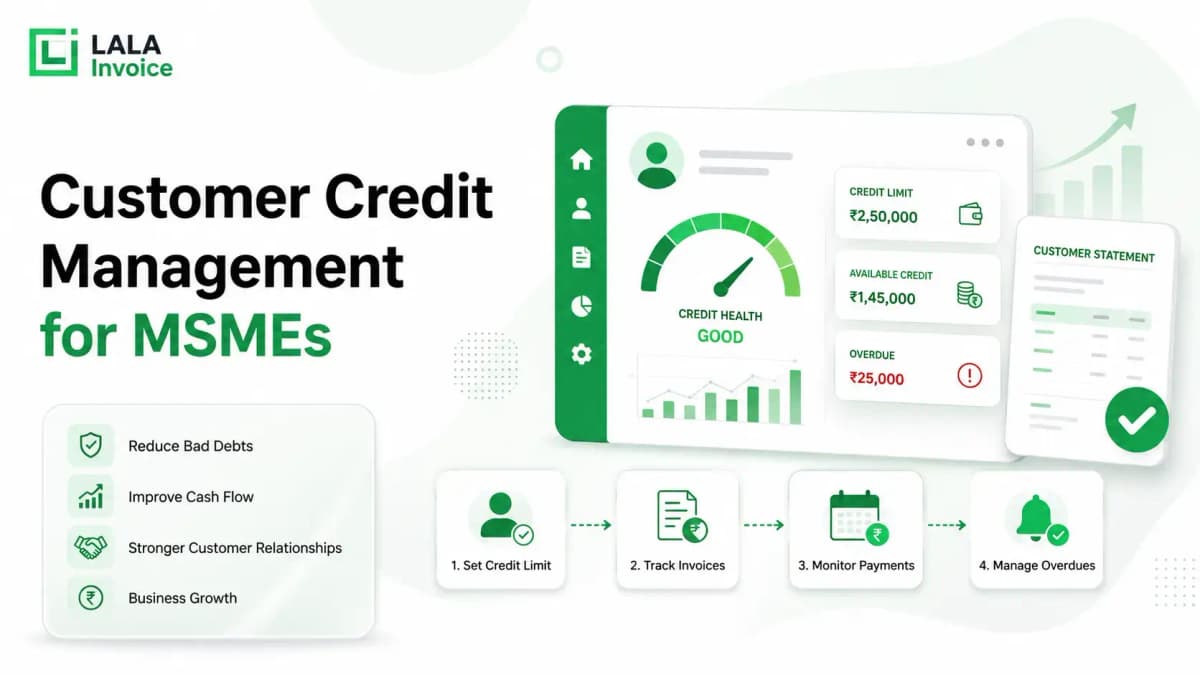
Customer Credit
Management for MSMEs
Effectively manage customer credit, minimize risk, and optimize your working capital. Get real-time visibility into customer credit profiles, track outstanding payments, and make informed credit decisions to protect your business's financial health.
Credit Risk Analysis
Automated scoring
Payment Monitoring
Real-time tracking
Collection Automation
Smart reminders
Data Security
Bank-grade protection
Everything You Need to Manage Customer Credit Efficiently
Credit Limit Management
Set and monitor customer credit limits effectively.
Customer Profile Tracking
Maintain detailed credit histories and profiles.
Risk Assessment Tools
Evaluate creditworthiness with automated scoring.
Payment Trend Analysis
Track payment patterns and identify risks early.
Aging Reports
Monitor overdue accounts and collection priorities.
Master Your Customer Credit Management
Customer credit management is a critical function for MSMEs that extends credit to their customers. It involves evaluating creditworthiness, setting appropriate credit limits, monitoring payment behavior, and taking proactive measures to minimize bad debts. Effective credit management ensures healthy cash flow, reduces financial risk, and supports sustainable business growth.
For MSMEs, managing customer credit effectively can be the difference between business success and failure. By implementing robust credit policies, automated monitoring systems, and proactive collection strategies, businesses can protect their working capital while building strong, long-term customer relationships.
Key Components of Customer Credit Management
Credit Assessment & Scoring
Evaluate customer creditworthiness using financial data, payment history, and external credit reports. Automated scoring systems help standardize credit decisions.
Credit Limit Management
Set appropriate credit limits based on customer risk profiles, purchase history, and financial capacity. Regular reviews ensure limits remain aligned with customer status.
Payment Monitoring & Tracking
Track customer payment patterns, identify early warning signs of payment difficulties, and monitor aging receivables to prioritize collection efforts.
Aging Reports & Analysis
Generate detailed aging reports to identify overdue accounts, track collection effectiveness, and maintain accurate customer credit records.
Collection Management
Implement systematic collection processes, automated reminders, and structured follow-up procedures to minimize overdue payments and reduce bad debts.
Customer Profile Management
Maintain comprehensive customer profiles with credit history, contact information, purchase patterns, and risk assessment data for informed decision-making.
Why Customer Credit Management is Critical for MSMEs
Effective customer credit management directly impacts your business sustainability and growth:
- Protect Cash Flow: Ensure timely payments to maintain healthy liquidity for operations.
- Minimize Bad Debts: Identify high-risk customers early and take preventive actions.
- Improve Working Capital: Optimize your cash conversion cycle with efficient credit management.
- Build Customer Trust: Offer fair credit terms while maintaining financial discipline.
- Enable Business Growth: Support sales growth with confident credit decisions.
- Reduce Financial Risk: Diversify credit exposure and maintain risk tolerance levels.
- Enhance Decision Making: Make data-driven credit decisions with real-time analytics.
- Maintain Profitability: Reduce collection costs and improve bottom-line performance.
Best Practices for Customer Credit Management
Establish Clear Credit Policies
Define and document credit policies including approval processes, credit limits, payment terms, and collection procedures for consistency.
Perform Regular Credit Reviews
Conduct periodic reviews of customer credit limits and risk profiles to ensure they remain appropriate and current.
Monitor Payment Patterns
Track customer payment behavior closely to identify early warning signs of potential payment problems.
Automate Collection Processes
Use automated systems for payment reminders, follow-ups, and escalation procedures to improve collection efficiency.
Maintain Accurate Records
Keep detailed and accurate records of all credit transactions, communications, and payment history for each customer.
Train Your Team
Ensure your team understands credit policies, knows how to assess risk, and can effectively manage customer relationships.
Take Control of Your Customer Credit Management
Effective customer credit management is essential for maintaining financial health and protecting your business against bad debts. With the right tools and strategies, you can optimize your credit portfolio, reduce financial risk, and build stronger customer relationships. Start implementing robust credit management practices today to safeguard your business's financial future.
Understanding Customer Credit for Business Growth
Customer credit management is a strategic business function that directly impacts your company's financial health and growth potential. By implementing effective credit policies and monitoring systems, businesses can minimize financial risk while supporting sales growth and customer relationships. Modern credit management solutions provide real-time visibility into your credit portfolio, enabling informed decision-making and proactive risk management.
01. Credit Risk Assessment Fundamentals
Credit risk assessment is the process of evaluating a customer's ability and willingness to pay. This includes analyzing financial statements, payment history, industry trends, and external credit reports. Automated credit scoring models help standardize this process, ensuring consistent and objective credit decisions that align with your risk tolerance levels.
02. Effective Credit Limit Management
Setting appropriate credit limits is crucial for balancing risk and opportunity. Credit limits should be based on factors including customer financial strength, purchase history, industry risk, and payment patterns. Regular reviews and adjustments ensure limits remain appropriate as customer circumstances change.
03. Proactive Payment Monitoring
Monitoring customer payment behavior is essential for identifying potential problems early. Look for changes in payment patterns, increasing outstanding balances, or delays in payment. Early detection allows you to take preventive action before minor issues become major problems.
04. Strategic Collection Management
Effective collection management involves systematic follow-up procedures, clear communication, and professional customer engagement. Implementing automated reminder systems, structured escalation processes, and maintaining detailed records of all collection activities improves efficiency and maintains positive customer relationships.
05. Leveraging Technology for Credit Management
Modern credit management software provides powerful tools for automating credit processes, generating real-time reports, and managing customer portfolios. These solutions integrate with accounting systems and provide comprehensive analytics for better decision-making and risk management.
✓ Effective customer credit management is the foundation of financial stability, enabling you to minimize risk, optimize cash flow, and drive sustainable business growth.