Invoice Payment
Terms Guide for Businesses
Understand the most common invoice payment terms used in business transactions. From Net 30 to early payment discounts, learn how to structure payment terms that improve cash flow, reduce risk, and strengthen customer relationships.
Clear Payment Terms
Set expectations
Cash Flow Management
Optimize payments
Discount Strategies
Encourage early payment
Risk Reduction
Secure transactions
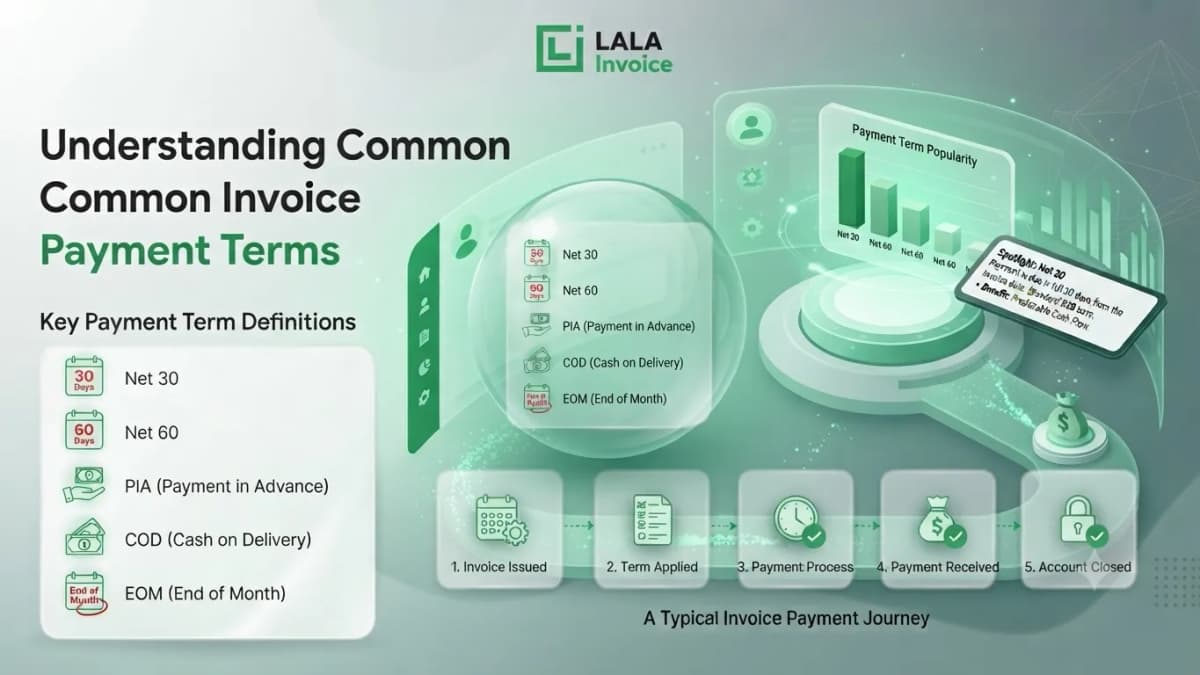
Common Invoice Payment Terms & How They Work
Net 30 Terms
Standard payment terms requiring payment within 30 days.
Net 60 Terms
Extended payment terms allowing 60 days for customer payment.
Early Payment Discounts
Offer discounts for customers who pay their invoices early.
Due Upon Receipt
Payment expected immediately upon receiving the invoice.
End of Month Terms
Payment due by the end of the current or following month.
Master Your Invoice Payment Terms
Invoice payment terms define the conditions under which a buyer must pay the seller for goods or services. These terms are critical for managing cash flow, setting clear expectations, and maintaining healthy business relationships. Common payment terms include Net 30, Net 60, 2/10 Net 30, and due upon receipt, each serving different business needs and customer relationships.
Selecting the right payment terms is essential for optimizing working capital, reducing credit risk, and maintaining positive customer relationships. By understanding the various payment term options and their implications, businesses can structure terms that align with their financial goals and customer expectations.
Key Types of Invoice Payment Terms
Net 30 Payment Terms
The most common payment term requiring full payment within 30 days of the invoice date. This provides a standard payment window for most business transactions.
Net 60 & Extended Terms
Extended payment terms offering 60 days or more for payment. Often used in enterprise and government contracts where longer payment cycles are standard.
Early Payment Discounts
Terms like 2/10 Net 30 offer a discount for early payment. This incentivizes faster payment, improving cash flow while offering value to customers.
Due Upon Receipt
Payment is expected immediately upon invoice receipt. Commonly used by small businesses and service providers to maintain immediate cash flow.
End of Month (EOM) Terms
Payment is due by the end of the current or following month. This simplifies accounting and aligns with monthly billing cycles.
Cash on Delivery (COD)
Payment required at the time of delivery. This eliminates credit risk entirely and is common in retail and small business transactions.
Why Invoice Payment Terms Are Critical for Business
Properly structured payment terms directly impact your business operations and financial health:
- Cash Flow Management: Predictable payment timing helps plan expenses and investments.
- Working Capital Optimization: Shorten cash conversion cycles with favorable terms.
- Risk Reduction: Minimize bad debts with appropriate credit terms.
- Customer Relationships: Clear terms build trust and reduce disputes.
- Business Growth: Support sales with flexible payment options.
- Financial Stability: Reduce dependence on external financing.
- Improved Forecasting: Predictable payment patterns enable better planning.
- Competitive Advantage: Offer attractive terms to win customers.
Best Practices for Setting Payment Terms
Know Your Customer
Assess customer creditworthiness and payment history before extending terms. Tailor terms based on risk profile and relationship.
Be Clear and Transparent
Clearly communicate payment terms on invoices and contracts to avoid misunderstandings and disputes.
Offer Early Payment Incentives
Use discounts to encourage faster payment and improve cash flow. Common incentives include 2/10 Net 30 terms.
Set Realistic Terms
Consider your cash flow needs and industry standards when determining payment terms. Balance customer needs with business requirements.
Use Payment Automation
Automate invoicing and payment reminders to reduce administrative burden and improve collection efficiency.
Review and Adjust Regularly
Periodically review your payment terms to ensure they remain competitive and aligned with your business goals.
Choose the Right Payment Terms for Your Business
Understanding and implementing the right invoice payment terms is essential for maintaining healthy cash flow, reducing credit risk, and building strong customer relationships. Whether you choose Net 30, early payment discounts, or other terms, ensure they align with your business strategy and financial goals. Start optimizing your payment terms today to improve your business's financial health.
Understanding Invoice Payment Terms for Business Success
Invoice payment terms are a critical business tool that defines how and when you get paid. By choosing the right terms, you can improve cash flow, reduce financial risk, and build stronger customer relationships. Understanding common payment terms like Net 30, Net 60, and early payment discounts enables you to structure agreements that benefit both your business and your customers.
01. Net 30 Payment Terms Explained
Net 30 is the most common payment term, requiring payment within 30 days of the invoice date. This standard term provides a predictable payment window that works for most B2B transactions. It balances the need for timely payment with customer convenience.
02. Understanding Early Payment Discounts
Terms like 2/10 Net 30 offer a discount for early payment. For example, a customer can take a 2% discount if they pay within 10 days; otherwise, the full amount is due in 30 days. This encourages faster payment and improves cash flow.
03. Extended Payment Terms for Enterprises
Net 60 and longer terms are common in enterprise and government contracts where longer payment cycles are standard. While these terms can strain cash flow, they are often necessary for securing large contracts.
04. Payment Terms for Small Businesses
Small businesses often use due upon receipt or cash on delivery terms to maintain immediate cash flow. These terms eliminate credit risk but may limit sales to customers who prefer credit terms.
05. Best Practices for Structuring Payment Terms
Effective payment term strategies include assessing customer risk, offering incentives for early payment, and using automated systems to manage invoicing and collections. Regular review ensures terms remain aligned with business needs.
✓ Choosing the right invoice payment terms is essential for optimizing cash flow, reducing risk, and driving business growth.