Stakeholder Report
Comprehensive Engagement Insights
A stakeholder report provides a comprehensive overview of all individuals, groups, and organizations that have an interest in your business. Track engagement, monitor communications, and maintain transparent relationships with every stakeholder who impacts or is impacted by your operations.
Full Visibility
All stakeholders
Real-time Tracking
Live updates
Engagement Metrics
AI-powered
Secure Data
Bank-grade
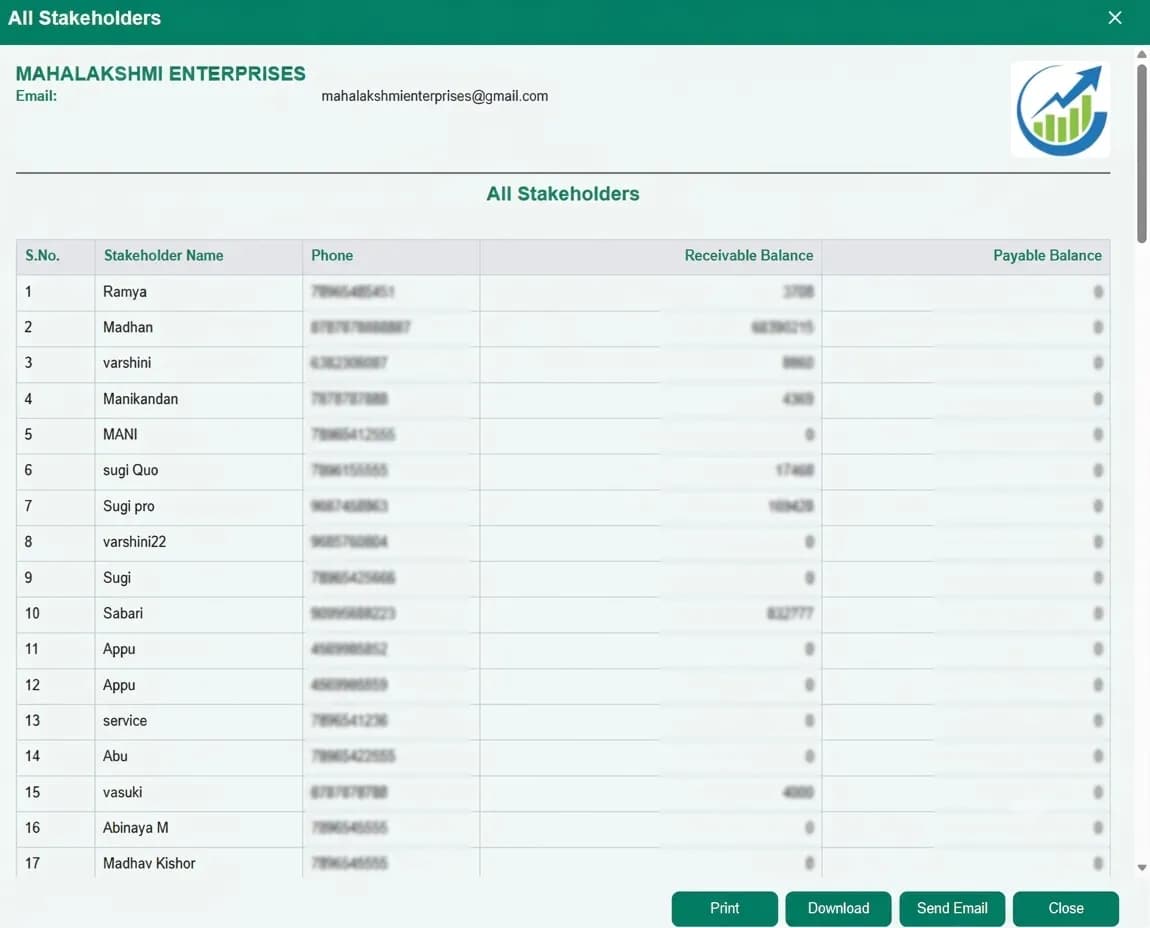
Everything You Need to Manage Stakeholder Relationships Effectively
Stakeholder Mapping
Identify and categorize all stakeholders across your organization.
Comprehensive Reports
Generate detailed stakeholder reports with key metrics and insights.
Engagement Analytics
Track stakeholder engagement and interaction patterns over time.
Shareholder Updates
Automated updates for shareholders and key stakeholders.
Visibility & Transparency
Full transparency into stakeholder relationships and communications.
Master Your Stakeholder Reporting
Comprehensive insights and tools to manage, track, and engage with all your stakeholders effectively
What is a Stakeholder Report?
A stakeholder report is a strategic document that provides a comprehensive overview of all stakeholders connected to your business. It categorizes stakeholders based on their interest, influence, and impact on your organization.
How to Use a Stakeholder Report
Follow these steps to maximize the value of your stakeholder reporting
Strategic Decision Making
Use stakeholder insights to inform business strategy, prioritize initiatives, and allocate resources effectively.
Risk Management
Identify potential risks and conflicts early by tracking stakeholder concerns and engagement patterns.
Communication Planning
Develop targeted communication strategies for different stakeholder groups based on their interests.
Relationship Building
Strengthen relationships through regular engagement, transparent reporting, and responsive communication.
Performance Evaluation
Track stakeholder satisfaction and engagement metrics to evaluate initiative effectiveness.
Compliance Tracking
Ensure regulatory compliance by maintaining accurate stakeholder records and communication logs.
Why Your Business Needs It
Build stronger relationships and drive sustainable growth through effective stakeholder management.
Increase Engagement
Build long-term relationships with key stakeholders through consistent and meaningful engagement.
Achieve Goals
Align stakeholder expectations with business objectives for mutual success and growth.
Ready to get started?
Transform your stakeholder relationships today
Key Benefits of Stakeholder Reports
Enhanced Visibility
Complete visibility into all stakeholder relationships and engagement levels.
Better Communication
Targeted strategies that resonate with different stakeholder groups.
Informed Decisions
Strategic decisions that consider all perspectives and interests.
Risk Management
Identify potential risks by monitoring stakeholder concerns and conflicts.
Key Components of a Stakeholder Report
Every comprehensive stakeholder report should include these essential elements
Stakeholder Identification
Comprehensive list with contact details, roles, and relationship history.
Engagement Tracking
Detailed records of all interactions, meetings, and follow-up actions.
Impact Assessment
Evaluation of influence, interest levels, and business impact.
Communication Logs
Centralized repository of all communications and meeting minutes.
Risk Evaluation
Assessment of risks and mitigation strategies for each group.
Performance Metrics
KPIs tracking satisfaction, engagement, and relationship health.
Financial Analysis & Decision-Making
Transform stakeholder insights into actionable financial strategies that drive business growth and stakeholder value.
Best Practices for Stakeholder Reports
Regular Updates
Update stakeholder information and engagement records regularly to ensure accuracy and relevance.
Consistent Categorization
Use consistent criteria for categorizing stakeholders to enable meaningful analysis.
Comprehensive Documentation
Maintain detailed records of all stakeholder interactions, communications, and feedback.
Regular Reviews
Conduct regular stakeholder reviews to assess relationship health and identify emerging issues.
Data Security
Implement robust data security measures to protect stakeholder information and maintain trust.
Actionable Insights
Transform stakeholder data into actionable insights that drive business improvement.
Understanding Stakeholder Reports for Business Growth
Effective stakeholder reporting is a cornerstone of sustainable business growth. By understanding the needs, concerns, and expectations of all stakeholders, businesses can build stronger relationships, mitigate risks, and create value that benefits everyone involved.
Understanding Stakeholder Reports for Business Growth
A stakeholder report is one of the most valuable strategic tools for any business, providing a comprehensive view of all parties with an interest in your organization's success. Unlike financial reports that focus solely on monetary metrics, stakeholder reports reveal the human and relational dimensions of your business.
Identifying Key Stakeholders
The first step in effective stakeholder reporting is identifying all individuals, groups, and organizations that have a stake in your business. This includes internal stakeholders like employees and management, as well as external stakeholders such as investors, suppliers, customers, regulatory bodies, and community organizations.
Mapping Stakeholder Relationships
Stakeholder mapping is a critical component of stakeholder reporting that visualizes the relationships between different stakeholder groups. Understanding how stakeholders interact with each other and with your business helps identify potential synergies, conflicts, and opportunities for collaboration.
Tracking Engagement and Communication
A stakeholder report serves as a central repository for all stakeholder engagement activities. By tracking every interaction, meeting, and communication, you can build a complete history of your stakeholder relationships and identify patterns that inform better engagement strategies.
Measuring Stakeholder Satisfaction
Regularly measuring stakeholder satisfaction is essential for maintaining healthy relationships. A stakeholder report should include metrics for tracking satisfaction levels, engagement quality, and relationship health to enable proactive relationship management.
Using Technology for Stakeholder Management
Modern stakeholder management software provides powerful tools for automating tracking, generating comprehensive reports, and creating engagement dashboards. These solutions integrate with communication platforms, CRM systems, and analytics tools to provide a holistic view of stakeholder relationships.
✓Effective stakeholder reporting is the foundation of sustainable business growth, enabling you to build stronger relationships, manage risks, and create value for all stakeholders.